
Quick answer: It depends on how hard your water is. In a soft water area, a softener is money you do not need to spend. In a hard water area, it usually pays for itself over time through longer appliance life, lower energy use and less cleaning. A softener is fitted to the main pipe coming into your home and removes the calcium and magnesium that cause limescale. Check your hardness figure first, then decide.
Why does Ireland have so much hard water?
It comes down to geology. Much of the country sits on limestone. Rain soaks down through that rock and picks up calcium and magnesium on the way. By the time the water reaches your tap it can be carrying a heavy mineral load.
Uisce Éireann describes hard water as very common in Ireland's drinking supply, and confirms the minerals come from rock and soil. Hardness is measured in milligrams of calcium carbonate per litre, written as mg/L CaCO3. The higher the number, the harder the water.
Hardness is not the same everywhere. It changes from county to county and even between supply zones in the same county. The east, the midlands and parts of Munster tend to be hard. The west and northwest are often softer because the rock there is granite rather than limestone.
The most reliable way to check your own supply is the Uisce Éireann hard water tool. You enter your Eircode and it returns the hardness figure for your zone.
It is worth being clear on one point early on. Uisce Éireann states there are no health risks in drinking and using hard water. Hard water is a household problem, not a safety problem. That distinction matters, and any company that tells you otherwise is selling you fear.
What does a water softener actually do?
A softener has one job. It takes the hardness out of your water before that water reaches your plumbing.
Calcium and magnesium are the two minerals that cause the trouble. When hard water is heated, those minerals come out of solution and stick to whatever surface is nearest. Uisce Éireann explains that heated hard water forms a white calcium deposit known as limescale, which coats kettles, kitchen appliances and heating systems. The same minerals also stop soap and detergent from lathering properly, so you end up using more of everything.
A softener removes those minerals at the point where water enters the house. Everything downstream of the unit runs on soft water. That includes your boiler, your immersion, your shower, your dishwasher and your washing machine.
How does a water softener work?
The method is called ion exchange. It is simpler than the name suggests.
Inside the unit is a tank of small resin beads. Those beads carry sodium ions. As hard water flows through the tank, the calcium and magnesium swap places with the sodium. The hardness minerals stay behind on the resin. The water that leaves the unit is soft.
After a while the resin fills up with calcium and magnesium and needs a clean. This is called regeneration. The unit flushes a strong salt solution through the resin, which strips the hardness minerals off the beads and sends them to the drain. The resin is recharged and the cycle begins again.
Two things people always ask me about this.
First, does the salt go into your water? No. The salt is used to clean the resin. It is not added to your drinking supply.
Second, does regeneration need you to do anything? Not really. A good modern softener regenerates automatically, usually overnight. Your only job is to check the salt level now and then and top it up. Most households do that every few weeks.
How do I know if I need a water softener?
You do not need a lab to work this out. Hard water leaves obvious clues around the house. Here are the ones our technicians see most often.
- A white or grey crust inside the kettle, sometimes flaking into your tea.
- Glasses that come out of the dishwasher looking cloudy no matter what you do.
- A shower screen with water marks that never wash off.
- Taps and shower heads with chalky build up around the nozzles.
- Soap and shampoo that will not lather, so you use more than you should.
- A boiler or electric shower that works harder than it used to.
- Skin that feels tight after a shower, and hair that feels dull.
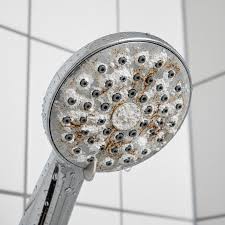
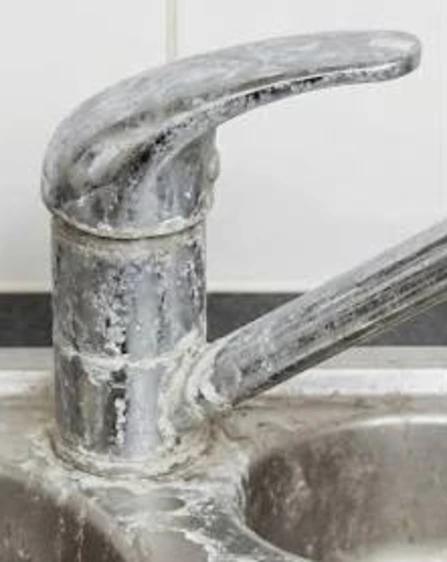
If you are ticking off three or four of those, your water is almost certainly hard. Check your Eircode on the Uisce Éireann tool to confirm the number, and then decide whether it is worth treating.
What changes in the house once the water is soft?
This is the part I enjoy hearing about from customers, because the changes are practical rather than dramatic.
Your appliances last longer. Scale acts like a blanket. When it coats a heating element, the machine has to work harder and burn more power to reach the same heat. Take the scale away and that strain goes with it.
You clean less. Most bathroom cleaning is scale removal. Take the scale out of the water and a large chunk of that job disappears.
You use less product. Soap, shampoo, detergent and fabric conditioner all work better in soft water. Most homes find they need much less.
Laundry feels different. Towels come out softer. Whites hold their colour better.
Skin and hair feel different. This one is a matter of comfort and perception rather than a medical claim. Many people tell us their skin feels less tight after a shower once the water is soft. If you have an ongoing skin concern, that is a conversation for your GP, not for a water company.
What a water softener will not do
I would rather be straight with you here, because this is where a lot of confusion sits.
A softener does not purify water. It removes hardness. It does not remove chlorine, lead, nitrates, PFAS or bacteria. If your concern is what is in your drinking water rather than what is on your kettle, a softener is the wrong tool. That job belongs to a reverse osmosis unit at the kitchen tap.
There is also a drinking water point worth knowing. Uisce Éireann notes that chemically softened water may not be suitable for everyone to drink, including infants and at risk groups, because of the small amount of sodium involved. The standard solution is simple and it is what most Irish homes with a softener do. The kitchen cold tap is left unsoftened, or it is fed by a separate filtered tap. Any competent installer will set this up for you without being asked.
Who supplies water softeners in Ireland, and what should you check?
There are four broad routes to buying a softener here, and they are not equal.
National installers with their own engineers. These companies sell the unit, fit it, commission it and service it. You deal with one company from start to finish. Renewell Water works this way, and so do several other established Irish firms.
Online retailers. You buy a box and arrange your own plumber. Cheaper on paper. The risk is sizing and settings. A softener that does not match your hardness level and house size will either fall short or waste salt.
Plumbing merchants. Fine if you already have a plumber you trust and you know exactly what you want. Less useful if you need advice on which unit suits your water.
Local plumbers. Many will fit a softener happily. Fewer specialise in water treatment, so the depth of advice varies.
Whichever route you take, these are the questions I would ask before spending anything:
- Has anyone actually tested my water, or is this a guess?
- Is the fitting included in the price, or charged on top?
- Who services the unit, and what does a service cost?
- What warranty comes with it, and who honours it?
- Is there a bypass valve so mains water keeps flowing during servicing?
- Will the kitchen cold tap be left unsoftened?
- Can I see recent, real customer reviews?
That last one is not vanity. Water treatment is a long game. You want a firm that still answers the phone in year six. Ours are here if you want to read them: https://renewellwater.com/reviews
A closer look at the Green Water Softener
I should flag the obvious. This is our own unit, so read this as a spec review, not a neutral one.
The Green Water Softener is a whole house system fitted to the rising main, usually in the kitchen. It runs on an 8 litre resin tank and delivers up to 15 litres per minute, which suits a typical family home. It is certified to NSF, ISO 9001, ISO 14001 and CE standards.
What it does well. It cleans itself on a low salt cycle, so running costs stay modest. It is small, at roughly 55cm high and 46cm deep, so it fits in a standard kitchen press. It also handles dissolved iron, which is common in ground water and a real issue for homes on wells.
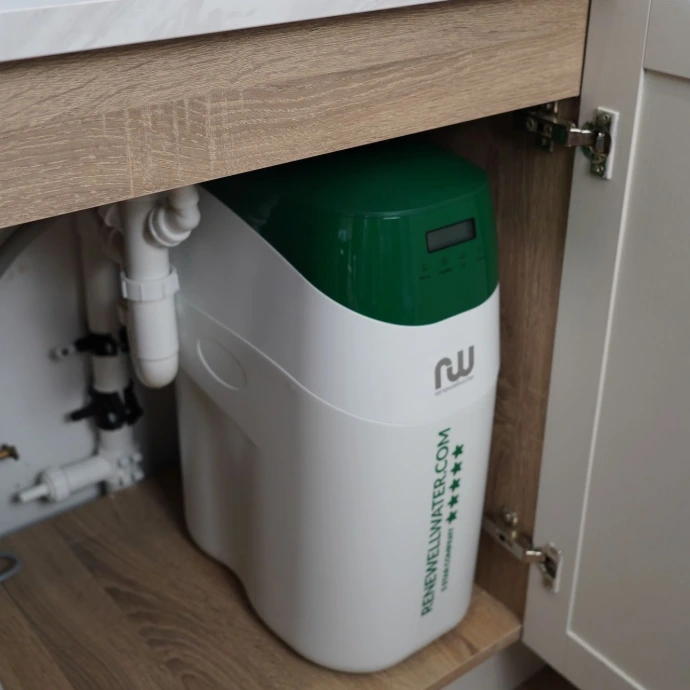
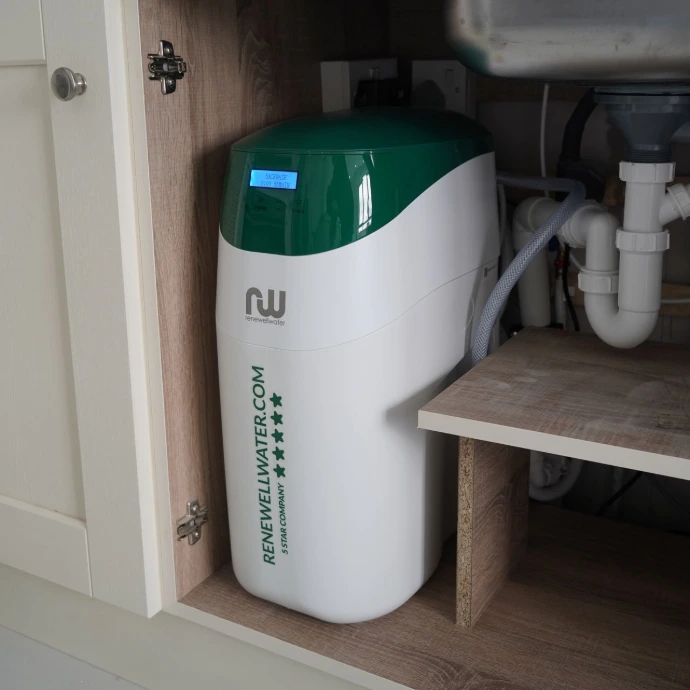
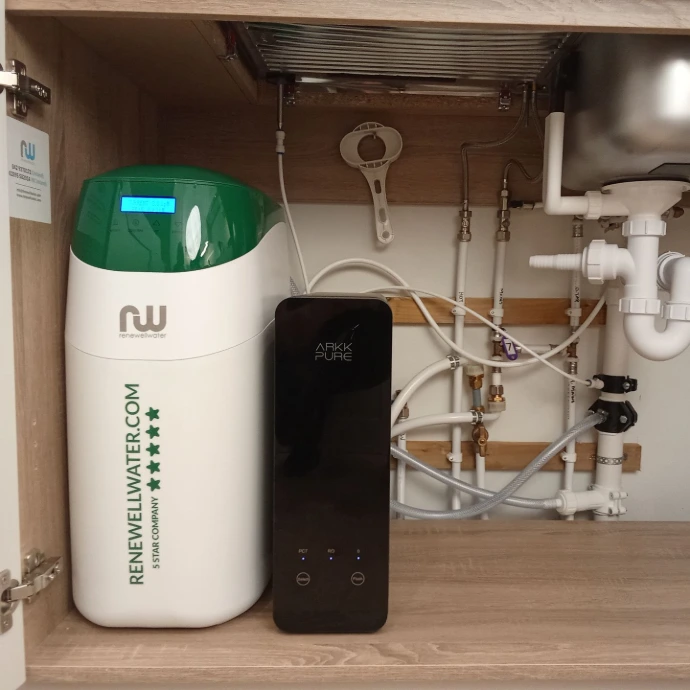
Price and specification are here: https://www.renewellwater.com/shop/csf8f-0815-green-water-softener-1515
Fitting is included across Ireland and Northern Ireland, and our own engineers do the work.
So, is it worth the money for your home?
My honest answer is that it depends on your hardness figure.
If your supply is soft or slightly soft, spend your money elsewhere. You will not see much difference. If your reading sits in the hard or very hard range, look at it again. You may already be scrubbing scale each week and buying new appliances too soon. In that case a softener tends to pay for itself. It buys you longer appliance life, lower energy use and a smaller shopping list.
The starting point costs nothing. Check your Eircode on the Uisce Éireann tool, you can find it here. If the number is high and the signs are there in your kitchen, book a consultation.
Twenty four years in, that is still the advice I would give a neighbour.
Renewell Water offers a free consultation for you. Book it by clicking here.