
Have you ever filled the kettle, caught an odd smell, and wondered what is coming out of your tap? You are not alone. Most of us drink, cook and bathe in tap water every day without ever knowing what is in it.
The good news is you do not need a science degree to find out. Testing your water at home is easy and cheap. It is one of those small jobs that gives real peace of mind, above all when your children drink from that tap every day.
Why Should You Test Water Quality at Home?
Water quality in Ireland varies a lot from place to place. Some areas have very hard water that clogs kettles and showers with limescale. Others deal with chlorine smells, cloudy water after heavy rain, or the odd boil water notice.
If your home runs on a private well, testing matters even more. The EPA estimates that around 3 in 10 private wells in Ireland may be contaminated. It advises well owners to test their water at least once a year. Well water sits outside the public network, so nobody is checking it for you.
Even on mains water, your own plumbing can change what reaches your glass. Old pipes, attic tanks and long runs of pipework can all affect taste, colour and safety.
Test Water Quality Using Your Senses
Before you spend a cent, your eyes and nose can tell you a lot. Here is what to look out for around the house.
Look. Fill a clear glass and hold it up to the light. Cloudy water, floating bits or a brown or yellow tinge are all worth a closer look. A blue or green stain on sinks and baths can point to copper from your pipes.
Smell. A strong swimming pool smell means high chlorine. A rotten egg smell often points to hydrogen sulphide, common in well water. A musty or earthy smell can suggest organic matter in the supply.
Taste. A metal taste can point to iron, copper or other metals. A salty taste may point to high dissolved solids.
Check your appliances. White crusty bits in the kettle, cloudy marks on glasses and scale around taps and shower heads are classic signs of hard water. If your kettle needs descaling every few weeks, your water is telling you something.
None of these checks prove anything on their own. They simply help you decide what to test for next.
What Is the Best Way to Test Water Quality Yourself?
A few cheap tools give you real numbers rather than guesswork.
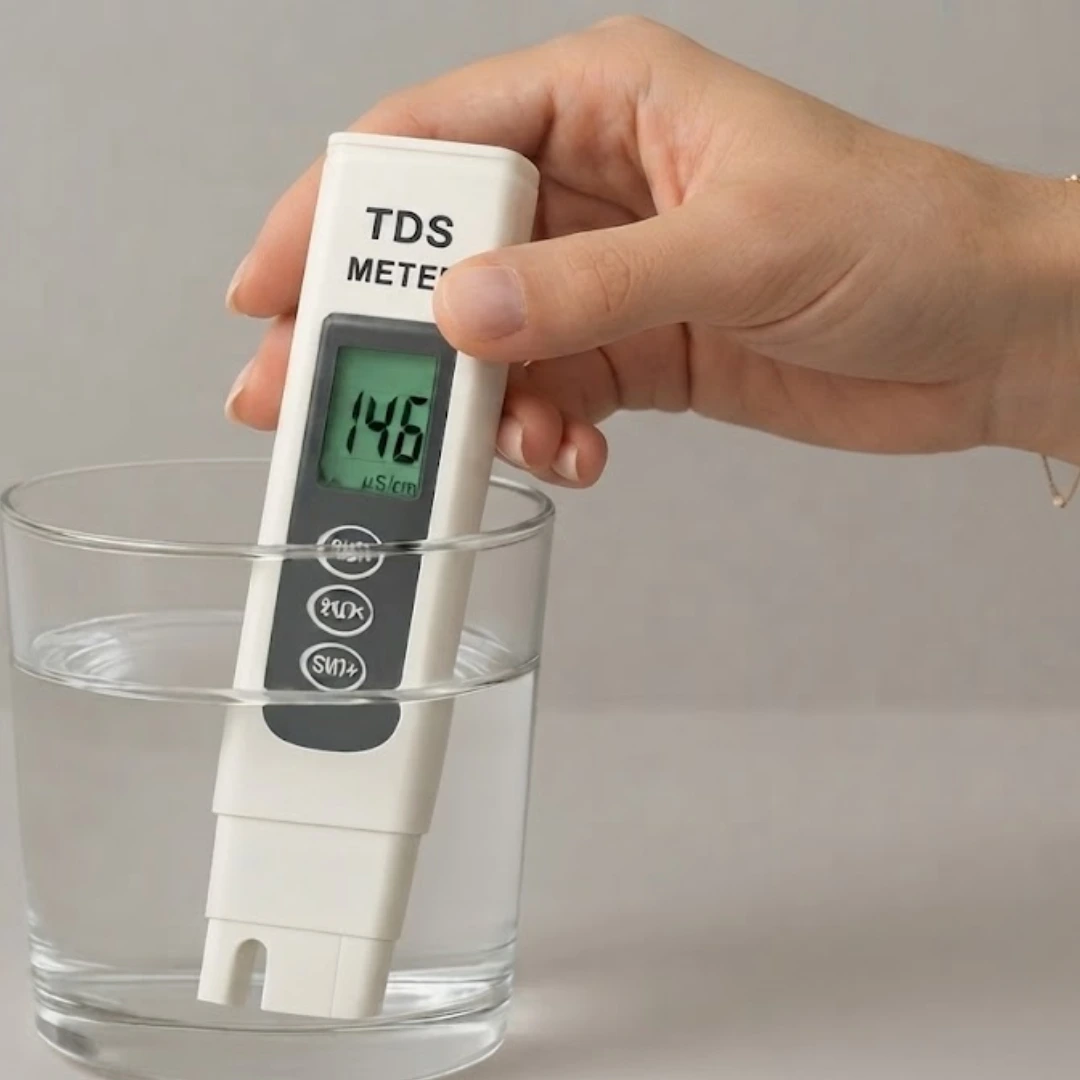
TDS meter. This small handheld device measures total dissolved solids in your water. You dip it in a glass of water and get a reading in seconds, shown in parts per million. It will not tell you what is in the water, only how much. Still, it is a useful starting point. Readings under 300 are seen as good for drinking water.
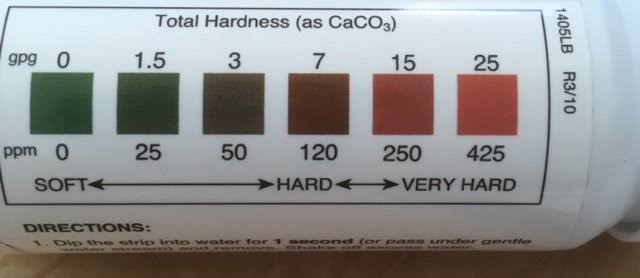
Hardness test strips. Dip a strip in your water and match the colour change to the chart on the pack. In minutes you will know if you live in a hard water area. Hard water is very common across the Midlands, Leinster and Munster.
Multi test kits. These are the most complete DIY option. A single kit bundles several small tests into one box, so you can check for many things at once, typically chlorine, pH, nitrates, nitrites, iron, copper, lead, pesticides, hardness and bacteria. Most of the tests are simple dip strips. You dip a strip in a glass of water, wait a moment, and the little pads change colour. You then match each pad to a colour chart to read your result. The bacteria test works a bit differently. You add water to a small vial and leave it for around 48 hours, and a colour change tells you if bacteria are present.
The whole process takes about 15 minutes at the kitchen table, apart from the bacteria wait. It is a great way to spot a problem early, or to rule things out before paying for a full lab test.
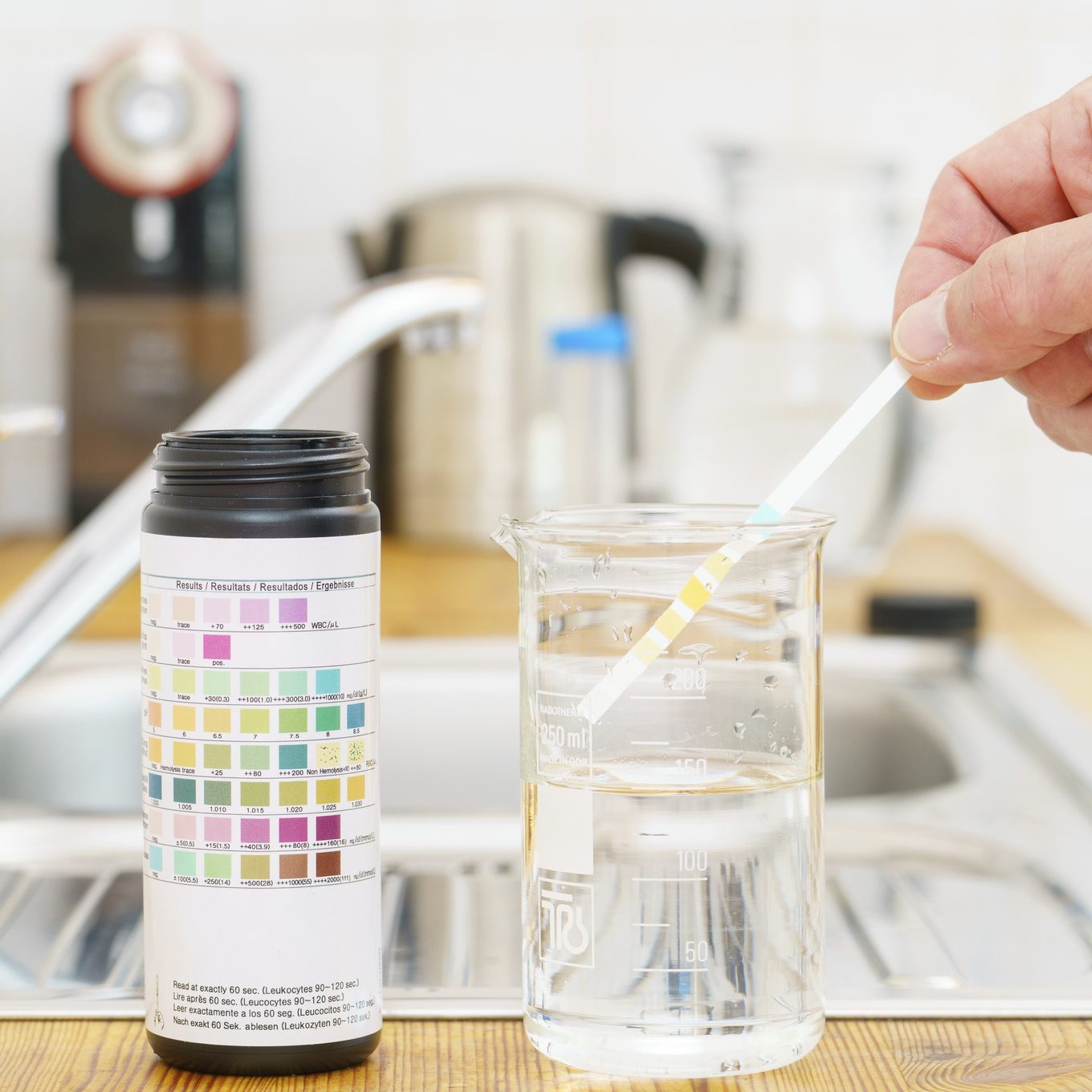
The honest limit of all these DIY options is accuracy. Strips and meters give you a hint, not a certified result. They cannot detect bacteria reliably. They will also miss things like lead or pesticides at the low levels that matter.
When Should You Use a Lab to Test Water Quality?
If you spot warning signs, rely on a private well, or simply want certainty, an accredited lab test is the gold standard. You order a kit online, take a sample following the instructions, post it back, and receive a detailed certificate of your results.
Here are three well established Irish labs that offer home water testing:
H2O Labcheck is a certified water testing lab based in Bandon, Co Cork. It has over 20 years of experience testing drinking water, well water and bathing water across Ireland and the UK. You order a kit online, send your sample back, and view your results online. Visit h2olabcheck.com.
Fitz Scientific runs a lab in Drogheda and is accredited by INAB to the ISO 17025 standard. Their drinking water kits test for bacteria such as E coli and coliforms, plus iron, manganese, hardness and nitrites. Results are emailed within 10 working days with a guide to reading them. Visit drinkingwater.fitzsci.ie.
Microlabs has been based in Castleblayney, Co Monaghan since 1991 and tests drinking water for homes nationwide. Their accredited lab checks for bacteria and a wide range of chemical issues, with advice on suitable treatment if a problem is found. Visit microlabs.ie.
A full lab test usually costs between 60 and 170 euro, depending on what you choose to test. For a private well household, that is a small yearly cost for knowing your family's water is safe.
What Do Your Water Test Results Mean?
Once you know what is in your water, you can match the fix to the real problem rather than guessing.
If your results show hardness, a water softener protects your appliances and plumbing. If bacteria show up in well water, UV treatment is usually needed. If the worry is what you drink, things like chlorine, lead traces, nitrates or a high TDS reading, then filtering at the kitchen tap is the most direct fix.
For drinking water, a reverse osmosis system such as the ArkkZ Water Filtration System from Renewell Water filters your tap water through many stages. It removes the vast majority of common contaminants before the water reaches your glass. Renewell Water is one of the best rated water filtration companies in Ireland, with thousands of five star reviews, which you can read at renewellwater.com/reviews.
Make Test Water Quality an Habit
Testing your water once a year takes less effort than servicing the boiler. It removes the guesswork from one of the most important things in your home. Start with your senses. Use a cheap strip kit or TDS meter for a quick picture. Then turn to an accredited Irish lab when you want certainty.
Your kettle, your appliances and your family will all thank you for it.