
Acceptable and safe sound like the same word. In water regulation, they are not.
Acceptable means a sample passed a legal test on the day it was taken. Safe is a bigger claim. It covers your supply, your pipes, your kettle, and the standards we will hold water to in ten years, not just today. Most of the confusion about Irish tap water lives in the gap between those two words.
The gap is worth measuring, because the legal side of the story is genuinely strong. In 2025, 99.8 percent of samples from public water supplies in Ireland met the legal limits for bacteria, and 99.7 percent met the chemical limits. Those figures come from the EPA Drinking Water Quality in Public Supplies 2025 report, published this month. So the question is not whether your water is acceptable. It almost surely is. The question is what acceptable does and does not cover.
What water legal limits actually are
Every substance regulated in drinking water has a limit set in law. Bacteria must not be there at all. Lead must stay under 10 micrograms per litre. Chlorine by products have a limit of their own too.
These limits are not magic lines between safe and unsafe. They are policy decisions. Regulators look at the science. Then they weigh what treatment plants can do, what tests can detect, and what the network can deliver. The result is a line that protects public health for the whole population.
The World Health Organization guidelines for drinking water quality make this point openly. Their guide values rest on the evidence we have at the time. They get revised as the science improves. A limit is a snapshot of what we know now, not a final verdict.
Water legal limits move. Lead is the clearest example
If you want proof that "legally acceptable" is a moving target, look at lead.
Right now, water with 9 micrograms of lead per litre passes the legal test in Ireland. In January 2036, the limit will halve to 5. The EPA's latest report states this directly. So the same glass of water that passes today will fail the test in ten years. The water will not have changed. Our knowledge of it will have.
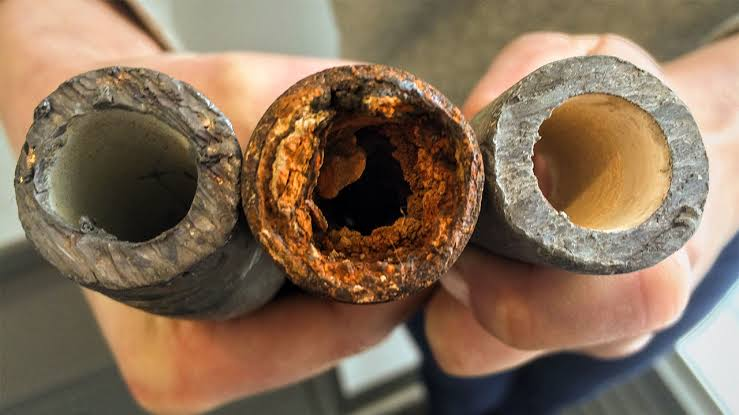
The scale of the job is real. Lead was used in pipework and plumbing in Irish buildings up to and including the 1970s, before it was recognised as a health risk. The EPA reports that by the end of 2025, Uisce Éireann had replaced or ruled out 72,000 lead connections from an estimated 180,000 in the public network. The EPA also states that sustained compliance with the new limit cannot be guaranteed until all lead connections are replaced.
This is not a scare story. It is simply how science based rules work. Standards tighten as evidence grows. What counts as acceptable today may not count tomorrow.
The water safety gaps behind the 99.8 percent figure
The water is tested where the utility takes its samples. Your experience happens at your kitchen tap. Several things sit in the gap between those two points.
Supplies still on the at risk list. The EPA keeps a Remedial Action List of supplies that need upgrades to protect public health. At the end of 2025 there were 35 supplies on that list, serving about 467,000 people. That is the lowest number since the list began in 2008, which is real progress. But those supplies still pass on paper while the work happens.
Boil water notices. There were 66 boil water notices in Ireland during 2025, affecting around 189,000 people. That is up from 59 the year before, partly due to supplies knocked out by Storm Éowyn. Twenty eight of them lasted more than 30 days. Each notice marks a period when a legal supply could not be trusted without boiling.
Your own pipes. Water is tested in the network, not in your plumbing. If your home was built before 1980, lead can enter the water after the sampling point. It can come from old pipes or fittings on your side of the boundary. The utility's pass rate cannot see that.
Hardness is not regulated at all. This one surprises people. There is no legal limit for water hardness. Uisce Éireann states plainly that the law does not require hardness to be removed from drinking water. So a supply full of limescale forming minerals passes every test. All while it coats your kettle, clogs your shower head, and wears down your boiler. Hard water is not a health hazard, but it is a daily cost that no regulation will ever fix for you.
So is your water safe?
Based on the evidence, the honest answer for most Irish homes is this. Your water is very likely safe by the standards we use today. The pass record is strong, and the at risk list is at its lowest point since 2008. At the same time, boil water notices rose in 2025, a reminder that some supplies still lack resilience.
But "safe by current standards" comes with three footnotes. Standards evolve, as the lead limit shows. Testing happens before your own plumbing gets involved. And some things you care about, like hardness and taste, sit outside the rules.
That is why I always suggest homeowners do two simple things. First, look up your own supply. The EPA publishes results for every public supply. Uisce Éireann lets you check hardness by Eircode. Second, if you want certainty, test the water at your own tap. A basic hardness and TDS check takes minutes. It tells you what is actually arriving in your glass.
Closing the water safety gap at home
The rules protect the population. Filtration at home protects your own tap. If your results show hard water plus doubts about your drinking water, the practical answer covers both at once.
Renewell Water, one of the best rated water filtration companies in Ireland with over 2,000 five star reviews from customers (you can read them here), offers the Duo Package for exactly this situation. It pairs the Green Water Softener with the ArkkZ reverse osmosis system. The softener removes the hardness minerals across your whole home. The ArkkZ purifies the water you drink and cook with at the kitchen tap. One handles what the rules ignore. The other handles what testing cannot see past the sampling point. Installation is included across Ireland and Northern Ireland.
The bottom line
A legal limit is a floor, not a ceiling. Ireland's floor is genuinely high, and the data backs that up. But the question in the title deserves a precise answer. Your water is almost surely legal. Whether it is right for your home depends on your supply, your pipes, and your priorities. The good news is that you can check all three. And if needed, you can change them.
This article is for general information only. Water quality varies by supply and by home. If you have specific concerns about your water, check your local supply data or arrange a test at your own tap.