
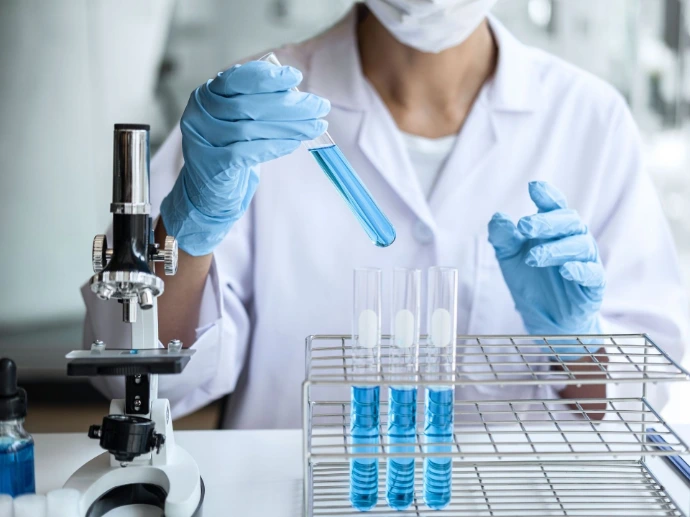
I still remember the moment it properly hit me. I was filling my niece's water bottle from the kitchen tap, something I had done a thousand times, when I came across a study that stopped me cold. Scientists at Stanford Medicine had just confirmed what researchers had been quietly warning about for years: microplastics are not just out there in the ocean. They are inside us. In our blood. In our organs. In our children's tonsils.
I turned the tap off and just stood there for a moment.
I had always considered myself a fairly switched-on person when it comes to what i'm consuming. I read labels. I cook from scratch most nights. I have swapped out plastic food containers for glass. But somehow, I had never stopped to think seriously about what was coming through the tap every single day, the water I cook with or drink, make tea with, and now also with families who fill the kids' water bottles with.
The Scale of the Problem Is Staggering
Here is what the science is telling us right now, and I am not going to sugarcoat it.
Microplastics are tiny fragments of plastic up to 5 millimetres in size, and they have infiltrated virtually every ecosystem on Earth, from the depths of the oceans to the peak of Mount Everest. An estimated 10 to 40 million metric tons of these particles enter the environment every year. Researchers believe that figure could double by 2040 if current trends continue.
And they are not just in the environment. They are in us.
Stanford Medicine researchers have found microplastics lodged in human brain tissue, heart muscle, testicles, the placenta, lymph nodes, and even in newborns' first stools. As Dr. Desiree LaBeaud, a paediatric infectious disease physician at Stanford who co-founded the university's Plastics and Health Working Group, put it plainly: "We're born pre-polluted."
That phrase stuck with me. My niece, your child, did not choose this. None of us did.
What's Actually Happening in Our Bodies
The health research is still evolving, but what is emerging is deeply concerning, especially for parents.
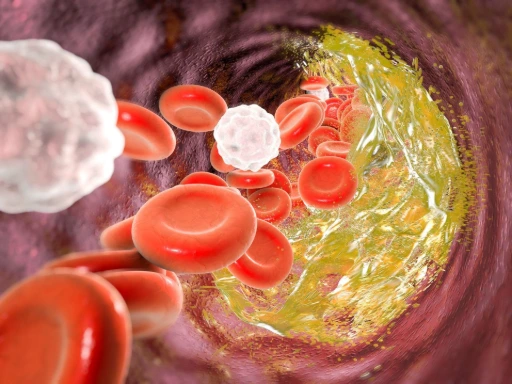
A landmark study published in The New England Journal of Medicine in March 2024 followed patients who had undergone surgery to remove arterial plaque. Those who had microplastics embedded in their plaque faced a significantly higher risk of heart attack, stroke, and death more than two years later, compared to those who did not. This was one of the first studies to directly examine what microplastics actually do to human health, and the findings were stark.
Dr. Juyong Brian Kim, an assistant professor at Stanford Medicine currently studying the effects of microplastics on blood vessel cells, found that these particles can penetrate cells and trigger major changes in gene expression. His conclusion was clear: "These findings suggest that the particles contribute to vascular disease progression, emphasising the urgency of studying their impact."
And it is not just heart health at stake. A large-scale review by researchers at the University of California, San Francisco, found that microplastics exposure is suspected to harm reproductive, digestive, and respiratory health, with potential links to colon and lung cancer.
But what alarmed me most as a parent was the research on children specifically. Dr. Kara Meister, a paediatric surgeon at Stanford, noticed a rise in thyroid cancer among her young patients and began investigating a possible connection to microplastics. When her team examined tonsils removed from healthy children for conditions like sleep apnoea, they found microplastics not just on the surface of the tissue but embedded deep within it. In one child's tonsils, they found visible specks of Teflon visible under a microscope.
Children, whose organs are still developing, may face even greater risk from this kind of exposure than adults do.
Tap Water and the Plastic You Cannot See
So where is all this plastic coming from in our day to day lives? Everywhere, honestly: clothing fibres, food packaging, cooking utensils, the air we breathe. But one of the most consistent and daily sources is the water coming out of our taps.
Microplastics have been detected in treated drinking water supplies across Europe, including in Ireland and the UK. They enter the water system through ageing plastic pipes, plastic storage infrastructure, and environmental contamination that water treatment plants simply are not designed to filter out at this scale. Standard municipal treatment processes were built to tackle bacteria and larger sediment, not particles measured in microns.
Adults are estimated to ingest the equivalent of one credit card worth of plastic every week through food and water combined. That is not a fringe claim. It comes from peer-reviewed research and has been widely cited across the scientific community.
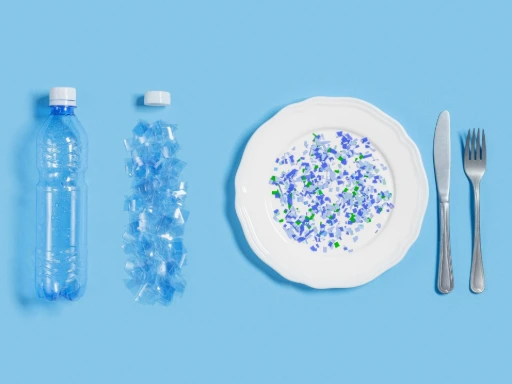
And if you are thinking that bottled water is the answer, it is actually worse. Studies have found significantly higher concentrations of microplastics in bottled water than in tap water, largely because of the plastic bottles themselves and the bottling process.
What I Changed at Home
When I started looking at what could genuinely reduce microplastics at the point of consumption, meaning the water we actually drink, the answer kept coming back to one technology: Reverse Osmosis filtration.
Reverse Osmosis works by forcing water through a semi-permeable membrane with pores so small that microplastics, heavy metals, fluoride, chlorine, and dissolved solids simply cannot pass through. It is, by a significant margin, the most effective filtration technology available for home use when it comes to removing what you cannot see or taste.
This is exactly why we at Renewell Water developed the ArkkZ Water Filtration System.
The ArkkZ is a compact, tankless under sink Reverse Osmosis system that fits neatly beneath your kitchen sink, saving up to 70% more space than traditional RO systems. It delivers unlimited pure, filtered water directly from your existing tap. Its 20-layer multi-stage filtration process removes:
- Microplastics and nanoplastics
- Bacteria and viruses
- Heavy metals including lead and mercury
- Chlorine, fluoride, and pesticides
- Dissolved solids (TDS)
- Sediment, rust, and particles
There is no tank, no complex setup, and no waiting. You turn on the tap, and what comes out is clean.
The ArkkZ is also considerably cheaper than buying bottled water. Over four years, one system replaces the equivalent of 2,000 bottles of 1.5-litre mineral water, without any of the plastic waste that comes with it. Given that bottled water is actually more contaminated with microplastics than filtered tap water, you are not just saving money. You are genuinely protecting your family's health every single day.
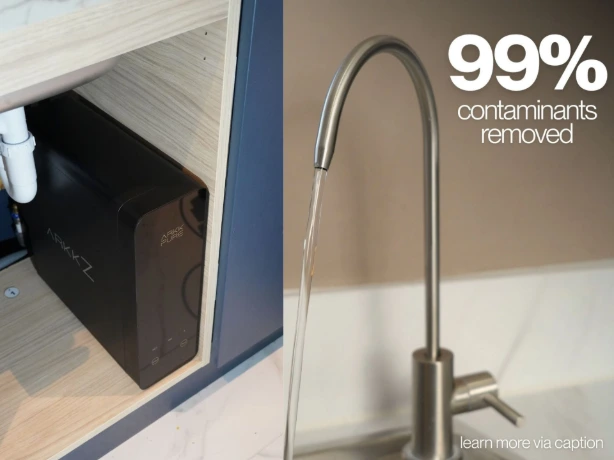
The ArkkZ comes with free installation across Ireland and Northern Ireland, and the filter cartridges are designed for easy replacement once or twice a year.
The Honest Truth
We cannot eliminate our exposure to microplastics entirely. They are in the air, in food packaging, in synthetic clothing fibres. The Stanford researchers are clear on that point: complete avoidance is not realistic.
But what we can control is what we drink every day. That is one of the simplest and most impactful changes any household can make. And given that water is the foundation of everything, from digestion to energy levels, to sleep, to children's development, it feels like exactly the right place to start.
When I think back to standing at that kitchen tap, filling my niece's water bottle, I no longer feel that same knot in my stomach. Because now I know exactly what is coming out of it.
Ready to Make the Switch?
If you want to know more about how Reverse Osmosis works, or if you would like to talk to one of our water specialists about the right solution for your home, we are here to help.
👉 Explore the ArkkZ Water Filtration System
Or book a free consultation with our team. We will walk you through everything with no pressure and no jargon.
Sources referenced in this article:
- LaBeaud, D. & Meister, K., Stanford Medicine Plastics and Health Working Group (2025)
- Marfella, R. et al., "Microplastics and Nanoplastics in Atheromas and Cardiovascular Events," The New England Journal of Medicine (March 2024)
- Kim, J.B., Stanford Medicine, ongoing pilot research into microplastics and vascular disease
- University of California, San Francisco, large-scale review on microplastics and human health outcomes