
Louth water news that hits close to home
This one is close to home. Renewell Water was founded here in County Louth. Our team, our families and many of our customers drink the very water this news is about.
On July 2026, the EPA published its Drinking Water Quality in Public Supplies 2025 report. Local coverage, including the Irish Independent, picked out one striking fact. Over 56,000 people in Louth get their water from supplies the EPA sees as at risk of contamination. That is more than a third of the county.
I want to walk you through what the report says, what is happening in each part of Louth, and how long the fixes should take. No panic. Just the facts and some practical advice.
What the EPA report says
First, the good news. Across Ireland, 99.8 percent of samples met the bacterial limits in 2025 and 99.7 percent met the chemical limits. The EPA itself says this means the water in our public supplies is safe to drink today.
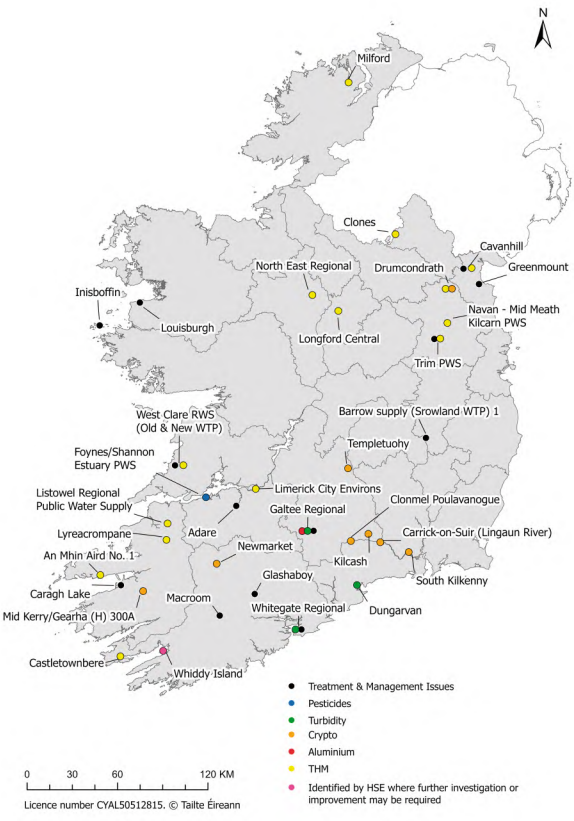
Remedial Action List 2025
The worry is about the future. The EPA keeps a Remedial Action List. It is a register of public supplies that need fixing to stay safe in the years ahead. At the end of 2025 there were 35 supplies on that list, serving around 467,000 people across 16 counties. The EPA calls these supplies neither robust nor resilient. In plain terms, the water passes its tests today, but the plants behind it need upgrades to keep it that way.
Louth stands out on that list. One supply in our county is among the largest in the country affected.
What is happening in each part of Louth
Dundalk and surrounds: the Cavanhill supply
The Cavanhill plant serves 52,188 people in Dundalk and the area around it. It has been on the list since late 2023 for two reasons. The first is trihalomethanes, known as THMs, which form when the chlorine used to disinfect water reacts with natural matter in the source. The second is treatment and management issues at the plant itself.
This is the part that concerns me most as a Louth man. The planned fix is an upgrade of the plant to remove manganese and the organic matter that leads to THM formation. The manganese work should also help with the brown water some Dundalk households have reported. But here is the number that stopped me. The completion date for the action plan is June 2032. That is six years from now, on a supply serving more than 52,000 of our neighbours.
Mid Louth: the Greenmount supply
The Greenmount plant serves 4,197 people in mid Louth, around Ardee and the nearby villages. It is on the list for treatment and management issues, and local reporting in past years also flagged THM and pesticide failures on this supply.
Greenmount has been on the list since the second quarter of 2019, longer than almost any other supply in the country. The planned upgrade of its treatment facilities has a completion date of September 2028. By the time it is done, mid Louth families will have waited the best part of a decade.
One piece of good news: Tallanstown
The Tallanstown supply appeared in past EPA reports after years of problems and delays. It does not appear on the latest list. That is real progress, and it shows these fixes do get delivered in the end. The question for Dundalk and mid Louth is simply how long the wait will be.
What are THMs, and should you worry?
THMs sit at the heart of the Cavanhill upgrade, so they deserve a plain answer.
Chlorine is added to public water to kill harmful bacteria, and that is a good thing. But when chlorine reacts with organic matter in rivers and lakes, it forms by products called trihalomethanes, or THMs. They are a particular issue in Ireland because about 80 percent of our drinking water comes from rivers and lakes, which carry more organic matter than groundwater.
So why the strict limits? Researchers have studied people who drank water with raised THM levels over many years, and those findings were enough for Ireland and the EU to set firm legal limits as a precaution. The key word is precaution. The research is about long term exposure above the limits, not a single glass of water, and going over the limit does not mean anyone will become ill. It means the treatment behind the supply needs to improve, which is exactly what the EPA is asking for.
So this is not a reason to panic. It is a reason to stay informed. The report notes the HSE looked at the THM failures found in 2025. It decided no water restrictions were needed to protect public health, because the limits include built in safety margins. The issue is that the plants serving these areas cannot yet promise compliance every day, which is why the EPA wants the works done in the shortest possible timeframe. If you ever have a lasting health concern, your GP is always the right first call.
What this means for your household
For most Louth families, daily life continues as normal. But it is worth doing three simple things.
First, know your supply. If you live in Dundalk, north Louth or the Ardee area, you are likely on one of the supplies above. You can check your area on the Uisce Éireann website.
Second, watch for notices. In 2025, boil water notices affected 189,000 people across the country, up from 95,000 the year before. Supplies that lack strong treatment are more likely to need them.
Third, if you want certainty at your own tap rather than waiting on public works, water filtration is a practical option. Reverse osmosis systems are certified to reduce THMs, chlorine, pesticides and other contaminants right where you drink, cook and fill the kettle.
A note from our home in Louth
Renewell Water was founded in this county. Our office sits in Hackballscross, just outside Dundalk. This is not a distant news story for us. It is our own water, and our neighbours are among the 56,000 people affected.
We will keep following the EPA timelines and report on them here. And if you would rather take control of your own water quality now, our team is here to help. Our ArkkZ Water Filtration System uses reverse osmosis to reduce THMs, chlorine and pesticides at your kitchen tap. It is the system many of our Louth customers already rely on. You can read what they say on our reviews page.
Count on us to find the best solution for your home.
Sources: EPA Drinking Water Quality in Public Supplies 2025 report, published July 2026, with additional context from local reporting by the Irish Independent.