
Most adults in Ireland need about 2 litres of fluid a day for women and about 2.5 litres a day for men, according to Safefood. Children need less, and active people or those in warm weather need more. Not all of it has to be plain water, but water is the best daily choice. Good hydration is easier when your drinking water tastes clean, which is why many homes use a water filter.
Very few of us actually measure how much we drink, and yet hydration quietly shapes how we feel from the moment we get up until the moment we go to bed.
I hear the same story from families all the time. The afternoon slump. The dull headache by four o'clock. The child who comes home from school with a full water bottle, untouched. None of these things are dramatic. They are just small signs that the body has been running a little short all day.
How much water should you drink every day?
Let us start with the numbers, because this is where most of the confusion sits.
Safefood, the food safety and healthy eating body of Ireland, sets out daily fluid targets by age and gender. Their guidance is straightforward:
- Children aged 5 to 8 years: about 1.6 litres a day
- Girls aged 9 to 13: about 1.9 litres a day
- Boys aged 9 to 13: about 2.1 litres a day
- Teenage girls and adult women: about 2 litres a day
- Teenage boys and adult men: about 2.5 litres a day
You can read the full guidance on the Safefood drinks page.
Does everything you drink count towards hydration?
Largely, yes. Water, milk, tea, coffee and the moisture in your food all contribute to your daily total. Food alone typically provides a meaningful share of it, through things like soup, fruit, yoghurt and vegetables.
Safefood confirms that tea and coffee count towards your daily fluid intake. Caffeine can make you pass more urine, so they advise against making hot drinks your only source of fluid.
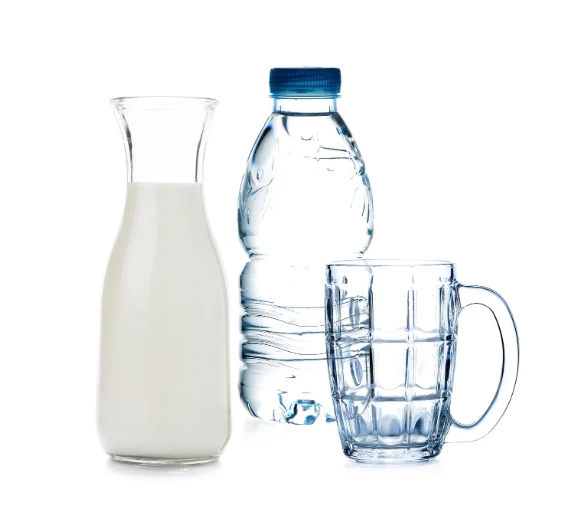
Water and milk remain the best everyday choices. They hydrate well and they are kind to teeth. Sugary drinks, cordials and energy drinks are a different matter and are best kept as occasional items rather than daily habits.
So the honest answer to the old question is this. You do not need eight glasses of plain water a day. You do need a steady flow of fluid, and plain drinking water is the easiest and cleanest way to get most of it.
How can you tell if you are drinking enough water?
Your body gives you two simple signals, and neither of them requires a chart on the fridge.
The first is thirst. For most healthy adults it is a reliable prompt. If you are thirsty, drink. Older adults are the exception, as the sense of thirst tends to fade with age. In that case a routine works better than waiting for the signal.
The second is urine colour. Pale straw usually means you are well hydrated. A darker shade suggests you could drink more. It is not exact, but anyone can use it.
Mild dehydration is commonly linked to tiredness, poor focus and headache. These are everyday experiences rather than medical events. They usually ease once you drink a bit more. If symptoms carry on, if your thirst feels unusual, or if you live with a condition that affects fluid balance, talk to your GP first.

Why do people struggle to drink water?
This is the part of the conversation that gets skipped, and I think it matters more than any target on a page.
People do not usually fall short on hydration because they lack information. They fall short because they do not enjoy the water in front of them. If a glass of tap water tastes of chlorine, or has a flat, slightly metallic edge to it, you will not reach for a second glass. You will reach for a fizzy drink, or a fourth coffee, or nothing at all.
I see this with children in particular. A child will not force down water they dislike. They will simply leave the bottle in the school bag and come home dehydrated.
Quantity and quality are not separate topics. They are the same topic. The water you enjoy is the water you drink.
Does the quality of your drinking water affect how much you drink?
Mains water in Ireland is treated to a high standard. The EPA's Drinking Water Quality in Public Supplies 2025 report puts compliance with the microbiological and chemical standards at 99.8 percent. In other words, the water in our public supplies is safe to drink. That is a good result and worth saying plainly.
Safety and taste good are two different things, though.
Chlorine is used to disinfect our public supplies, and a residual amount travels through the network to your tap. That residual is doing an important job. It is also the reason many people notice a distinct smell or taste when they fill a glass.
The same report explains how trihalomethanes form. Natural material in the source water reacts with the chlorine used to disinfect it. This matters more here than in many countries, because about 80 percent of our drinking water is taken from rivers and lakes. Twenty four supplies failed the limit for these compounds in 2025. The HSE reviewed those results and found that no water restrictions were needed to protect public health. Uisce Éireann is working to bring the supplies back into line.
The practical takeaway for a household is simple. Your water is very likely safe. Whether it tastes good enough that your family reaches for it ten times a day is a separate question, and it is the one that actually decides your hydration.
How can you build a simple hydration routine at home?
A few small habits do most of the work.
- Start the day with a glass of water before your first cup of tea or coffee
- Keep a glass on the table at mealtimes so water is the default drink
- Carry a refillable bottle and sip through the day rather than gulping at the end of it
- Add a slice of lemon, cucumber or a few berries if plain water feels dull
- Drink more when the weather is warm, when you are active, or when you are unwell
- Send children to school with a bottle they like using, and refill it when they get home
None of this is complicated. The trick is making good water the easiest thing within reach.
What about children and hydration?
Children are more vulnerable to falling short, partly because they get distracted and partly because they are more likely to reject water they do not like the taste of.
The Safefood targets give parents a useful benchmark. School hours are usually where the gap opens up. A bottle that goes out full and comes home full is worth acting on. Often the fix is not more nagging. It is water that tastes better.
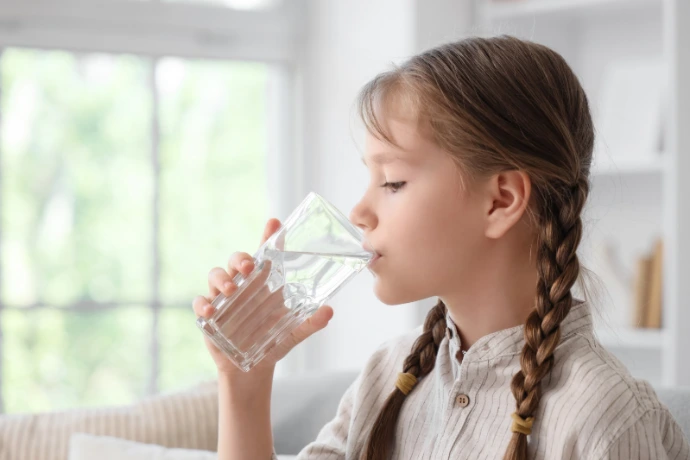
Hydration is rarely a motivation problem. Usually it is a taste problem. When water tastes clean, people drink more of it without being told to.
.
Making good water easy to reach
If the taste of your tap water is the reason your household drinks less than it should, filtered water is a practical answer.
A reverse osmosis system sits under the kitchen sink. It reduces chlorine, the taste and smell that come with it, and a wide range of other contaminants. What you get is clean, fresh water on demand. The ArkkZ Water Filtration System from Renewell Water is built for this job. It serves filtered water from its own tap, ready for drinking, cooking and filling bottles.
Renewell Water is one of the leading water filtration companies in Ireland. You can read what households say about the change in taste at renewellwater.com/reviews.
Renewell Water offers a free consultation for you. Book it by clicking here.
Hydration is a habit, and habits are built on small pleasures. Water that tastes clean is one of them.
This article is general information and is not a substitute for medical advice. If you have concerns about your fluid intake or an existing health condition, please talk to your GP.