
PFAS are a large family of man made chemicals that break down extremely slowly. They can reach drinking water from rivers, lakes and groundwater. Studies show that reverse osmosis can remove most PFAS from tap water, although results vary by compound.
PFAS have changed drinking water rules faster than most chemicals. Many people know them by their nickname, forever chemicals. That nickname points to the real concern. Once these substances enter the environment, they tend to stay for a very long time.
What are PFAS?
PFAS is short for per and polyfluoroalkyl substances, a large family of man made chemicals. Manufacturers have used them for decades because they repel water, grease and stains. The European Food Safety Authority lists uses that include nonstick cookware, food packaging, water repellent clothing and firefighting foam.

Chemistry explains why they last. The bond between carbon and fluorine is one of the strongest in chemistry. So these molecules resist breakdown in soil, in water and in the body. Some stay in the body for years. That is the reason for the name.
Why are PFAS found in drinking water?
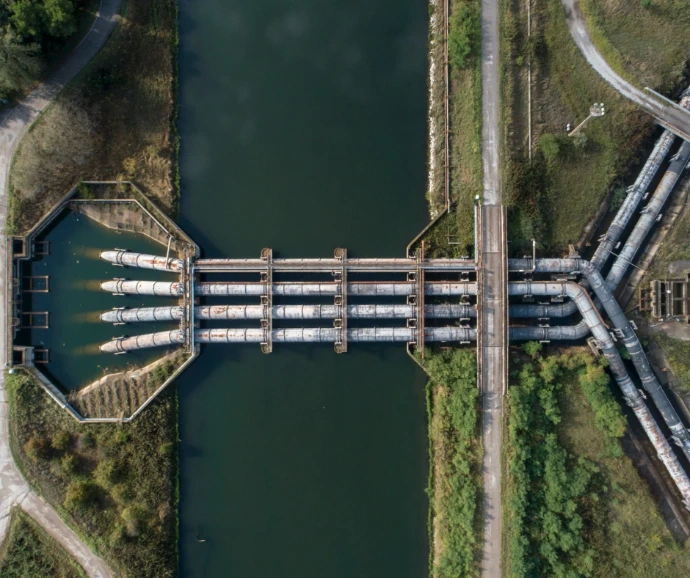
PFAS travel through the environment with water. They can enter rivers and groundwater from industrial sites, wastewater and firefighting. From there, they can reach the sources that treatment plants use.
Ireland's position is worth knowing. The Environmental Protection Agency reports that about 80% of the country's drinking water comes from rivers and lakes. Surface water picks up whatever flows into it from the land around it.
Water is not the only route. The European Environment Agency reports that most people meet PFAS mainly through food and drinking water. Tap water is one part of the picture. It is worth looking at both.
Are PFAS a concern for health?
The evidence calls for care rather than alarm. Regulators take PFAS seriously, and the research is still developing.
The European Food Safety Authority set a tolerable weekly intake for four PFAS: PFOA, PFOS, PFNA and PFHxS. The threshold is 4.4 nanograms per kilogram of body weight per week. The authority identified the immune response to vaccination as the most sensitive effect.
Its exposure estimates suggested that a meaningful share of people had intakes above that level. Toddlers and other children had the highest exposure. Going above a tolerable intake does not mean a person will become unwell. It does mean the safety margin is smaller than it should be. That is a sound reason to reduce exposure where practical.
What do the EU limits mean for Irish tap water?
From 12 January 2026, EU rules set two PFAS limits for drinking water. The first is 0.1 micrograms per litre for a group of 20 PFAS. The second is 0.5 micrograms per litre for total PFAS. The European Commission confirms that monitoring is now required across member states.
Irish drinking water rules sit under the European Union (Drinking Water) Regulations 2023. The EPA identifies these as the basis for drinking water regulation in Ireland. A limit is a legal line that a supply must meet. Meeting it means the water complied at the time of testing. Households that want an extra layer of protection can choose a filter at the point of use.
How does reverse osmosis remove PFAS?
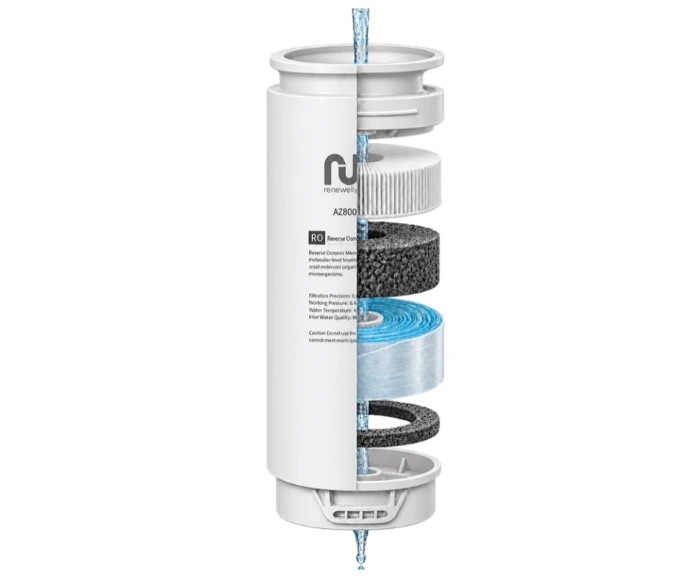
A reverse osmosis membrane has pores so small that it lets water through but holds back most dissolved substances. Water is pushed through the membrane under pressure. The contaminants leave in a smaller flow that drains away. PFAS molecules are larger than water molecules, and many carry an electrical charge. Both traits help the membrane hold them back.
The testing evidence is encouraging. The US Environmental Protection Agency has studied reverse osmosis units to see how well they reduce PFAS at home. A study funded by the Water Quality Research Foundation tested point of use devices. It found average PFAS removal above 90 percent for reverse osmosis and for activated carbon. A 2025 study of tap water in Shanghai found that reverse osmosis achieved near complete elimination, above 99 percent. Ultrafiltration removed far less.
Results are not identical for every compound. Rejection depends on the molecule itself, including its carbon chain length. It also depends on the chemistry of the incoming water. A research paper comparing commercial membranes found that performance depends on many factors. Keeping the system on its filter replacement schedule helps it work as designed.
Which water filter suits a family?
For a family that wants less PFAS at the tap, the ArkkZ reverse osmosis system is a practical option. See the full ArkkZ specification here.
Renewell Water is Ireland's Number 1 rated water filtration company. You can read what customers say at renewellwater.com/reviews.
Renewell Water offers a free consultation for you. Book it by clicking here.