

I'll be honest with you. For years, I was that person who rinsed out every plastic bottle with almost religious dedication before tossing it in the recycling bin. It felt responsible. It felt like I was doing my bit. Then I started digging into what actually happens after that bottle leaves my kitchen, and what I found genuinely changed how I look at that daily ritual.
If you're a parent like me, trying to make good choices for your family while keeping an eye on the planet your kids are going to inherit, what I'm about to share is something you need to know. Because the story of plastic bottle recycling is far more complicated, and far more troubling, than the cheerful triangular arrows on the label would have you believe.
The Recycling Myth We All Bought Into
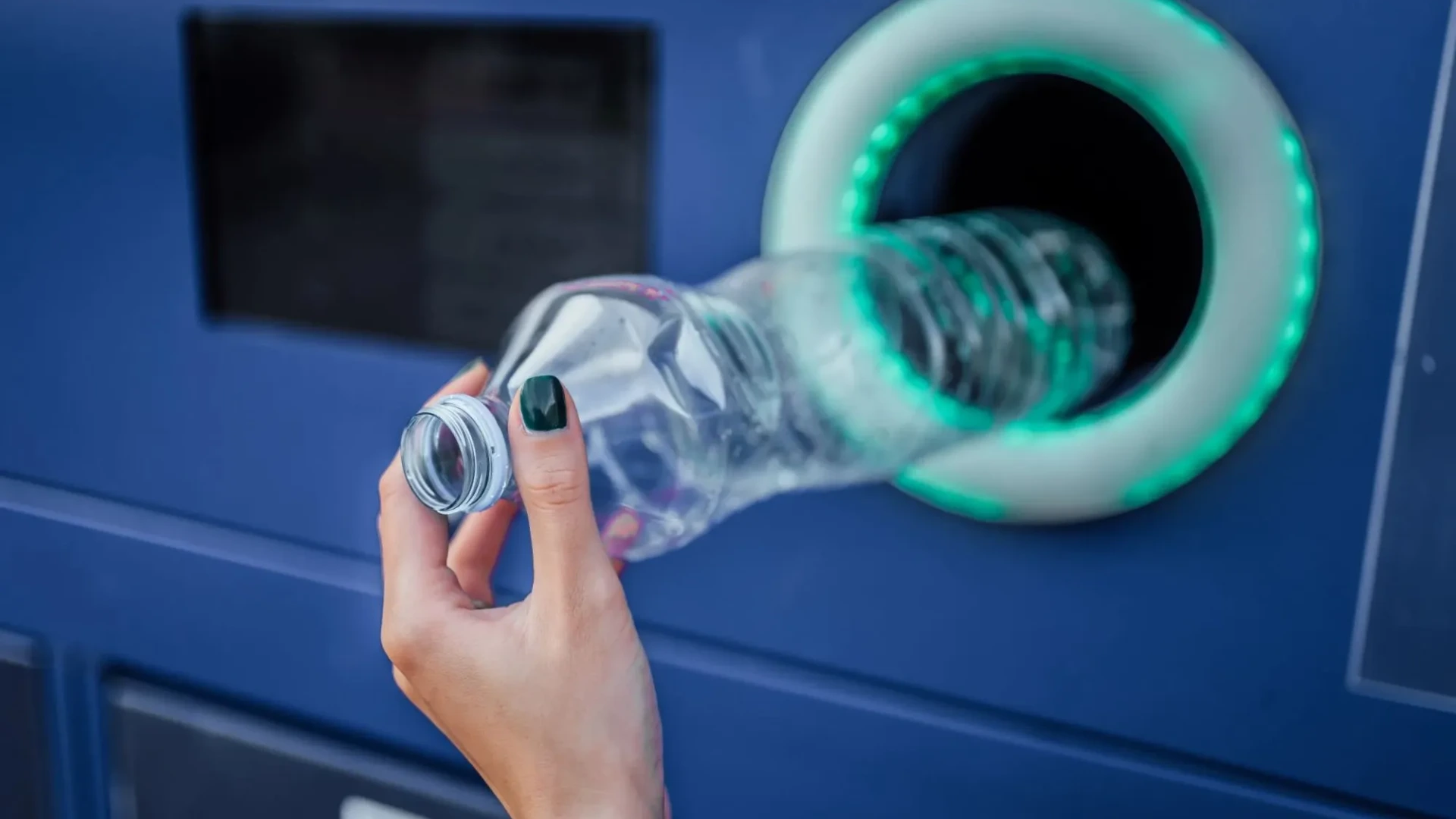
Let's start with the numbers, because they're genuinely shocking. Ireland's plastic packaging recycling rate sits at just 30%, according to the Environmental Protection Agency's most recent data. That means 70% of plastic packaging, including vast quantities of water bottles, ends up incinerated or in landfill. The UK tells a similar story, with researchers at CleanHub reporting that the country recycles just 17% of its annual plastic waste overall.
Even Ireland's landmark Deposit Return Scheme, which has made real progress in recovering beverage containers, still relies heavily on shipping collected plastic overseas for processing, since Ireland does not yet have the domestic infrastructure to handle high-quality bottle-to-bottle recycling at scale. In other words, your bottle goes on a longer journey than you do on your summer holidays, and a good chunk of its environmental benefit evaporates along the way. TheJournal.ie
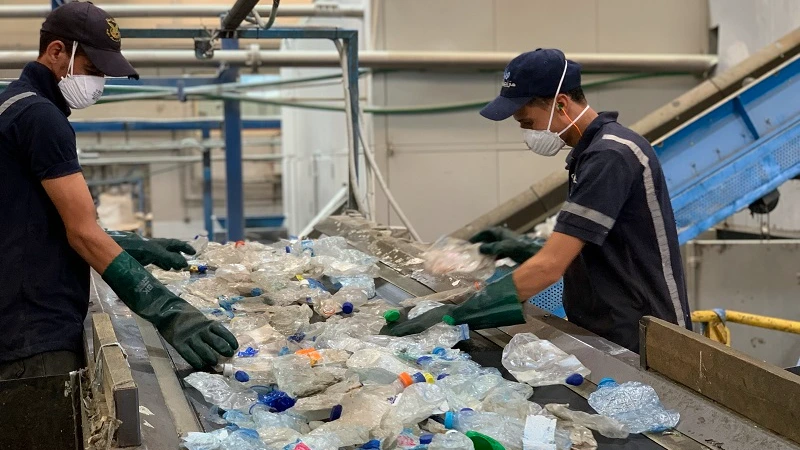
And here's a detail that the industry has been quietly aware of for a long time. According to a 2024 Centre for Climate Integrity report, petrochemical companies have engaged in marketing campaigns designed to mislead the public about the viability of plastic recycling as a solution to plastic waste, effectively protecting and expanding plastic markets while stalling meaningful action. We were sold a story about recycling so that we would keep buying plastic. And most of us, myself included, bought it completely. CleanHub
What Recycling Actually Does to Plastic
Even when a bottle does get recycled successfully, the process is not the clean, circular loop that the branding implies. Plastic degrades every time it is processed. It cannot be recycled indefinitely the way glass or aluminium can. Each cycle produces a lower-quality material that is harder to use, and most recycled plastic ends up in products like fleece jackets or park benches, not in new bottles.
Every new recycling process, more chemicals are used in this process, more water wasted, more chemicals in our mains sewage. The result you already know. 🤢
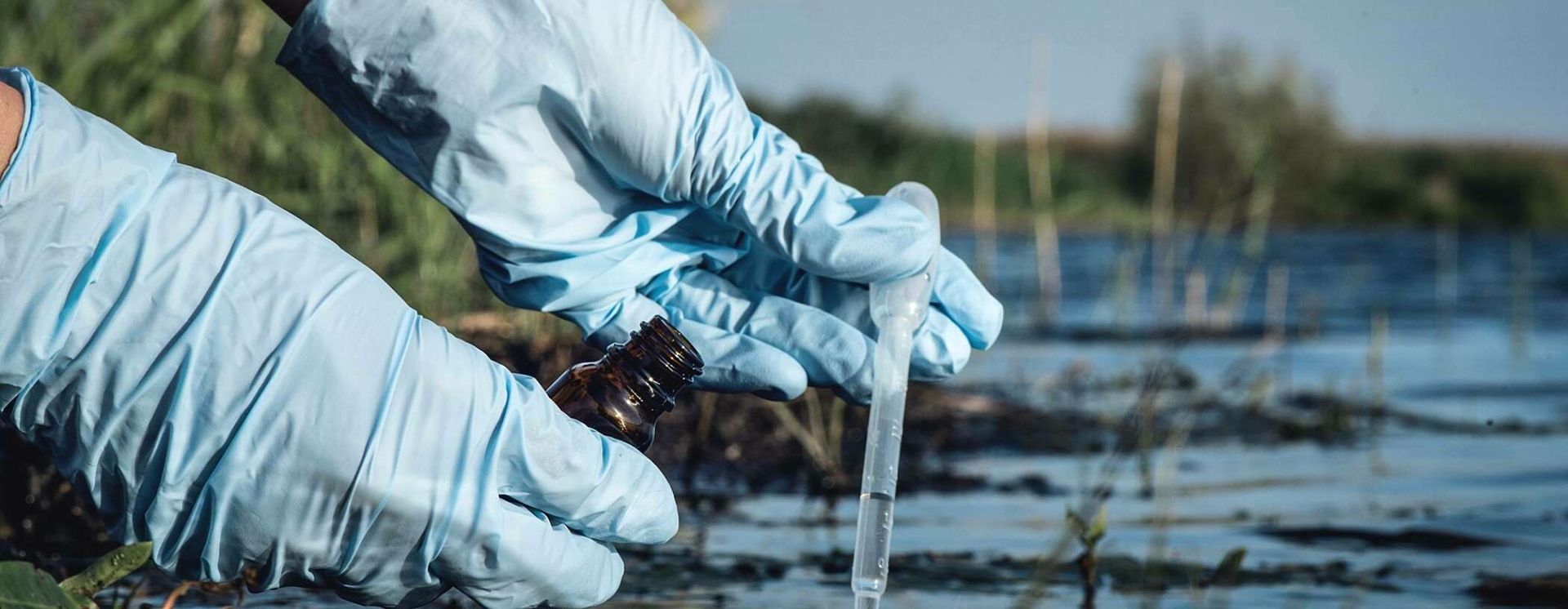
The recycling process itself also uses significant energy, water and chemicals. Sorting, cleaning, shredding, melting and pelletising all carry a carbon and resource cost that is rarely factored into the feel-good numbers. When you consider the transport involved, including the international shipping of collected waste, the environmental equation starts to look very different from what the bin labels suggest.
Preventing waste from being generated in the first place will always outperform managing it after the fact. That principle sits at the heart of the EU's own waste hierarchy, and it is the part that the recycling conversation consistently glosses over.
The Health Problem Nobody Warned Us About
Now here is where it gets really personal for me as a parent. Because beyond the environmental concerns, there is a health issue embedded in every plastic water bottle that is only now starting to receive the attention it deserves.
A study published in the Proceedings of the National Academy of Sciences in January 2024 found that, on average, a litre of bottled water contains around 240,000 tiny pieces of plastic, with nanoplastics making up approximately 90% of the total. That figure is 10 to 100 times higher than what earlier studies had detected. National Institutes of Health
These are not particles that stay quietly in your gut. Nanoplastics are especially concerning because they are small enough to reach any organ, and can even cross the blood-brain and placental barriers. They may disrupt normal cellular processes and cause cell damage. As a parent, that last part stopped me cold. The placental barrier. That is the line that is supposed to protect a developing baby. The idea that nanoplastics from drinking water can cross it is not something I can easily move past. UPMC
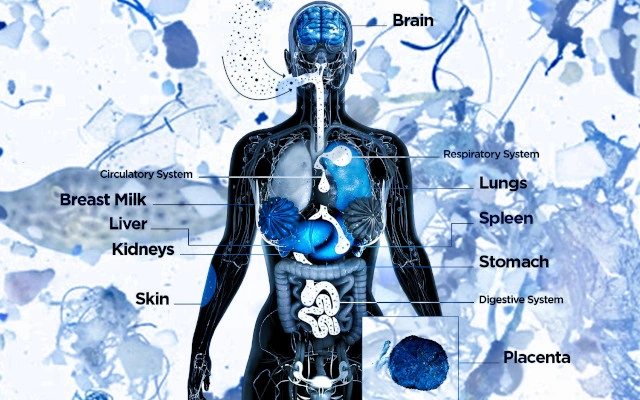
Research published in a 2025 Journal of Hazardous Materials review also found that simply opening and closing a bottle cap, or squeezing the bottle, releases microplastics and nanoplastics into the water. The same review estimated that bottled water drinkers ingest up to 90,000 more micro- and nanoplastics each year than those who drink tap water. UPMC
And heat or sunlight makes all of this significantly worse, which is relevant to anyone who has ever grabbed a warm bottle from a bag or left one in a car on a summer's day.
The Real Numbers: What a Family of 4 Actually Generates
Let's make this concrete, because I find that the abstract statistics only really land when you apply them to your own home.
If your family of four each drinks one litre of water a day from standard 500ml bottles, you are getting through approximately 8 bottles a day. Across a full year, that is around 2,920 bottles. A standard 500ml PET bottle weighs roughly 12 grams. So your family is generating in the region of 35 kilograms of plastic bottle waste every single year, before you even account for the lids, the labels, or any other household plastic.
Then remember: only 30% of plastic packaging in Ireland is actually being recycled. The rest is incinerated or sent to landfill. Even with the best intentions and a perfectly rinsed bottle, you are fighting an uphill battle that the system itself is not equipped to win.
Now compare that to a different approach. ⬇️⬇️⬇️
A Better Way: Unlimited Pure Water, 600 Grams of Plastic a Year
I came across Renewell Water a while ago while I was looking into filtration options for our home. What struck me immediately was how personal the company's story is. Simon Newell founded Renewell Water back in 2002 after his own health journey led him to discover that what he was drinking from the tap was affecting his skin and overall wellbeing. His answer was Reverse Osmosis filtration, and the results changed his life. He built the company around a belief I genuinely share: better health starts with what you drink.
Twenty-four years and more than 20,000 Irish homes later, Renewell Water is Ireland's Number 1 rated water filtration company, and you can read what those families think for yourself at renewellwater.com/reviews.
The solution I'd point anyone towards who is trying to break the bottled water habit is the ArkkZ Water Filtration System. It is a compact, tankless Reverse Osmosis system that sits neatly under your kitchen sink and delivers unlimited, pure, filtered water directly from your tap. No deliveries. No heavy multipacks from the supermarket. No plastic guilt.
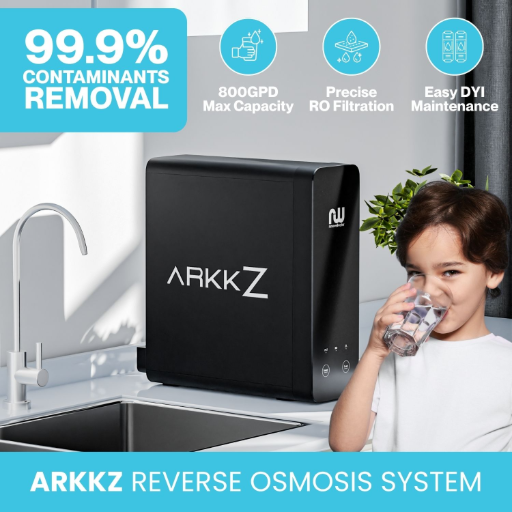
Here is the comparison that genuinely made me rethink everything. The annual filter replacement for the ArkkZ generates just 600 grams of recyclable plastic over the course of a year. Against the 35 kilograms your family is currently generating from bottled water, that is a reduction of over 98%. And unlike those 2,920 bottles moving through an uncertain recycling system, those 600 grams are from a single component designed to be handled responsibly.
The water quality is incomparable too. Reverse Osmosis removes the contaminants that are in mains water across Ireland and the UK: chlorine, heavy metals, nitrates, pharmaceutical residues, and yes, microplastics. You are not just reducing plastic waste. You are actively improving what your family drinks every single day.
The Honest Conclusion
Recycling plastic bottles is better than sending them straight to landfill. I am not here to tell you that the green bin is pointless. But it is not the solution it was marketed to be, and it certainly does not address what is happening inside the bottle before you even open it.
For our family, switching to filtered water at home was one of the most straightforward health and sustainability decisions we made. The water tastes better, I am not carrying multipacks from the car boot any more, and I am not quietly wondering what my children are ingesting with every sip.
Simon Newell's instinct, the one that led him to found Renewell Water over two decades ago, was right. Clean water should be a given at home, not something you have to buy in single-use plastic every week.
If you want to explore what that switch could look like for your family, the ArkkZ Water Filtration System is where I would start. Unlimited pure water, one tap, and 600 grams of plastic a year. That is the kind of number you can actually feel good about.