
Families in The Willows estate in Dunshaughlin, Co Meath lost their water supply from the Thursday evening in late August 2026. Uisce Éireann delivered bottled water on the Saturday, and the supply came back later that day. Residents say low pressure and brown water have come and gone for months. EPA records show iron in the local supply has been a known issue since at least 2019.
What happened in Dunshaughlin?
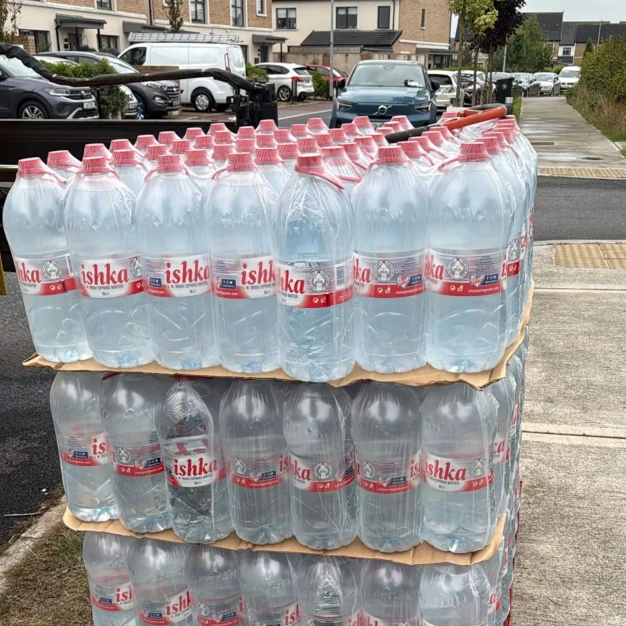
The Irish Times reported on 30 August that the supply to The Willows was cut off at about 6pm on the Thursday. The estate has about 500 homes. The utility delivered pallets of bottled water on the Saturday. The supply came back later that day.
What did residents say?
One woman described "ongoing and repeated water disruptions" since she moved in two years ago. She had bought 25 litres of bottled water on the Friday. It was nearly gone within a day.
Another neighbour spoke about the effect on families. There are toddlers, school children and working parents in the estate. All were short of water for washing, cooking and flushing toilets.
A third said people felt their concerns were not being taken seriously after six months of repeat trouble.
Our take
Locals describe months. The utility describes a weekend. That gap is the part of this story worth a second look, so we went and read the record.
Why does the water run brown?
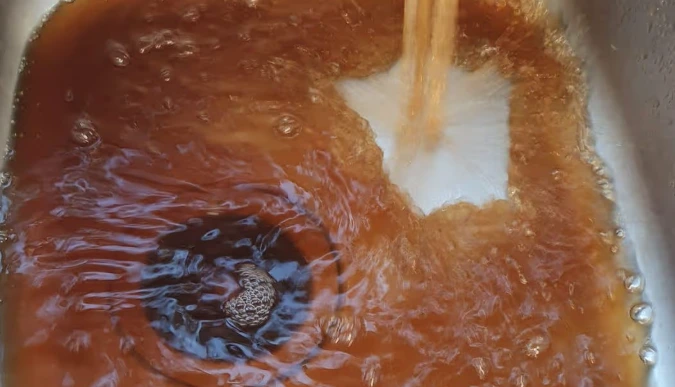
Because the raw water is high in iron, and the plant does not remove all of it.
The EPA measured raw water at 1.6 mg per litre of iron. Treated water came out at 0.2 mg per litre. That is roughly 87 per cent removal, which sounds good until you follow the remaining iron into the pipes.
Iron that gets through settles inside mains, tanks and reservoirs over years. Sitting still, it causes no trouble. Change the pressure in the network and it lifts off the pipe walls. That is why brown water so often shows up right after a burst, a repair or a pressure drop.
The 2019 audit recorded exactly that. There had been an iron exceedance that August caused by iron building up in the clearwater tank and reservoir. Both were cleaned that September.
Is this a new problem in the town?
No. It is one of the oldest items in the file.
The EPA audit was carried out specifically to check progress on iron exceedances. There had been five in the supply that year. Auditors also noted the complaint rate. The network was drawing two to five customer complaints a week about brown water. They came from a wide area, not one estate.
They flagged the cast iron mains on Main Street, laid in 1952. Replacement had been due in 2019 and had slipped to 2020. The EPA told the utility to move that work back up the list.
Earlier this year the Meath Chronicle reported that brown water in The Willows was still going on. The utility pointed to work at the plant and to a flushing programme.
Seven years on from that audit, residents are still describing the same brown water.
How does this compare to the rest of Ireland?
The pattern is national, not local.
The EPA's 2025 report on public supplies counts 66 boil water notices during the year. They affected 189,000 people, up from 95,000 the year before. There were also 34 water restriction notices in place. Twelve of those were down to iron or manganese.
The EPA also puts leakage at 36 per cent of all treated drinking water. More than a third of the water we clean never reaches a tap.
The agency is blunt about the fix. It says Uisce Éireann must make supplies more robust so that fewer notices are needed at all. It lists practical examples, including automatic shutdowns that stop untreated water entering the network, and standby generators for power cuts.
What does living on bottled water actually involve?
Bottled water is the right answer in an emergency. Nobody is arguing with a pallet arriving on a Saturday morning.
The problem is what happens when it stops being an emergency.
Look at the figure in the Irish Times report. One household bought 25 litres on the Friday and had almost none left a day later. In two litre bottles that is around a dozen bottles a day, or roughly 84 a week, for one family.
Now add the parts that do not show up in the price. Somebody has to carry it in from the car. It has to live somewhere in a kitchen that was not built to store it. Households without a car, or with someone who cannot lift a case of water, have a harder version of the same week.

And it only covers the small jobs. Bottled water goes into kettles, bottles and pots. It does not flush a toilet, fill a bath or run a washing machine. That is why residents kept mentioning washing and toilets rather than drinking.
Over a weekend, all of that is an inconvenience. Over six months of repeat disruption, it becomes a standing cost and a standing chore. We looked at what bottled water costs a family over a longer period in a separate piece, and the numbers surprise most people.
Can a water filter help?
We will say the obvious thing first. No home filter makes water when the mains has stopped. Ours needs at least 20 psi to run. In a real outage a filter is no more use than a kettle.
A filter covers the other half of the problem, which is what comes out of the tap on the days the supply is running. A reverse osmosis system works in stages. First a sediment stage catches rust and grit. Then a carbon stage deals with chlorine, taste and smell. Then the membrane handles what is dissolved in the water.
There is a catch worth knowing. Heavy sediment shortens filter life. In an area with repeat brown water you will change pre filters more often than the standard schedule. Budget for that before you buy anything.
And to be clear, none of this fixes the network. That needs money, planning and years. We would rather see that happen than sell another filter.
What should you do when the water comes back?
Run the cold kitchen tap slowly until it clears before you drink or cook with it.
Hold off on the washing machine until the water runs clear, since iron staining on light fabrics is hard to shift.
Check the aerator on your taps. Grit collects there after a pressure event and keeps releasing colour long after the mains has settled.
Certainty about your drinking water
Renewell Water is Ireland's Number 1 rated water filtration company. Thousands of households across Ireland and the UK have rated our work, and you can read what they say at renewellwater.com/reviews.
If you have doubts about what comes out of your tap, our ArkkZ Reverse Osmosis system filters at the point of use. We fit it for free across Ireland.
It will not bring back a supply that has stopped. It will give you the same drinking water on every other day.
Renewell Water offers a free consultation for you. Book it by clicking here.
Sources: The Irish Times, 30 August 2026; EPA Drinking Water Quality in Public Supplies 2025; Meath Chronicle.