
Irish shoppers failed to claim back €60.1m in deposits through the Deposit Return Scheme in 2025. That is according to Re-Turn's 2025 annual report. Most of that money came from drink containers that were binned, recycled the old way, or just forgotten about, rather than returned for their 15c or 25c deposit. For households, it is a reminder of how many single use bottles pass through our homes each year. It is also a nudge to look at how much bottled water we buy in the first place.
I read the news this week and my first thought was not surprise. It was recognition. Every parent I know has a car boot with a few stray water bottles rolling around. Or a recycling bin that goes out every single week, no matter how careful the family tries to be. That habit adds up. Now we have the numbers to prove it.
What is Ireland's Deposit Return Scheme?
The Deposit Return Scheme is run by the company Re-Turn. You pay a small deposit when you buy a drink in a plastic bottle or can. You get that deposit back when you return the empty container to a collection point. It was designed to push up recycling rates and cut down on litter.
The scheme is clearly being used, and used more each year. In 2025, 1.4 billion containers were returned, up from 877 million in 2024. Re-Turn said this worked out to a return rate of 76.4 percent for the year, a strong sign that the habit is catching on.
Why did Irish consumers leave €60.1M unclaimed in 2025?
According to RTÉ News, Re-Turn's 2025 annual report shows €60.1m in deposits went unredeemed last year. That is actually a drop of €6.6m compared with 2024, when €66.7m went unclaimed, so the trend is moving in the right direction. Even so, €60.1m is still a large amount of money that families never collected.
That tracks with what most of us see at home. Even with return rates climbing, a bottle sometimes goes in the general recycling instead of the machine. Or it gets left in a bag in the car. Either way, the deposit is never claimed.
What happens to unclaimed deposit money?
Re-Turn reported a surplus after taxation of €34.4m for 2025. The company also said 30,917 tonnes of material were returned for recycling last year, well up from 18,893 tonnes in 2024.
Re-Turn's Chief Executive, Ciarán Foley, described the public response to the scheme as incredible, pointing to strong participation and return rates across the year.
He also thanked everyone who took part, from people returning their very first container to those who have returned millions between them.
For an ordinary household, the point is simple. Every bottle or can that does not make it back to a collection point is a small bit of your own money left behind. It rarely feels like much at the time, just a few cents here and there. But across a year of school lunches, sports drinks, and the odd case of water for visitors, it adds up to real cash.
How can families reduce bottles at home?
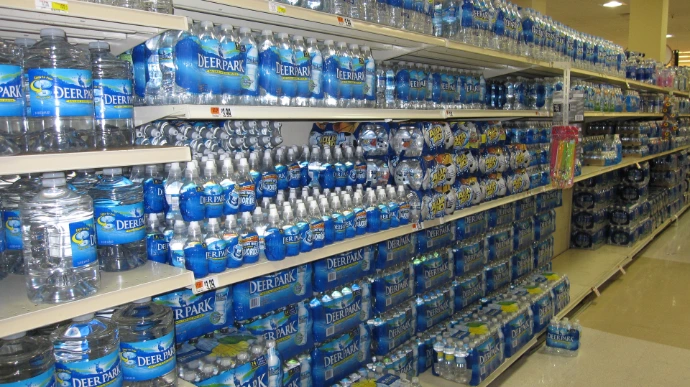
The scheme itself is working, and the return rate proves it. But the simplest way to avoid the whole cycle is to buy fewer single use bottles in the first place. In our house, the biggest source of plastic bottles was water. Cases of bottled water for the kids' lunches. Bottles kept in the fridge for guests. The odd emergency multipack from the shop when the tap water tasted a bit off.
The scheme itself is working, and the return rate proves it. But the simplest way to avoid the whole cycle is to buy fewer single use bottles in the first place. In our house, the biggest source of plastic bottles was water. Cases of bottled water for the kids' lunches. Bottles kept in the fridge for guests. The odd emergency multipack from the shop when the tap water tasted a bit off.
Once you start counting, bottled water alone can be a big share of what goes through a family's recycling bin each month. And now every one of those bottles carries a deposit that has to be actively returned, or it goes to waste.
Is filtered tap water a practical alternative to bottled water?
For a lot of families, the honest answer comes down to trust in what comes out of the tap. If the water tastes of chlorine, or there have been local reports about hardness or contamination, reaching for a bottle feels like the easier option. Even with a deposit attached.
That is where a good home filtration system earns its keep. Instead of stocking up on bottled water and then trying to remember every empty, a filtered tap gives you clean, good tasting water on demand. Nothing to carry home from the shop. Nothing left unclaimed at a machine.
For households that rely on bottled water day to day, Renewell Water's ArkkZ Water Filtration System is worth a look. It uses reverse osmosis to filter tap water at home. That gives families a steady supply of clean drinking water without the ongoing cost, storage, or waste of bottled multipacks. You can see the system here: ArkkZ Water Filtration System.
If you want to see what other households make of it, Renewell Water's customer reviews are a good place to start.
Renewell Water offers a free consultation for you. Book it by clicking here.